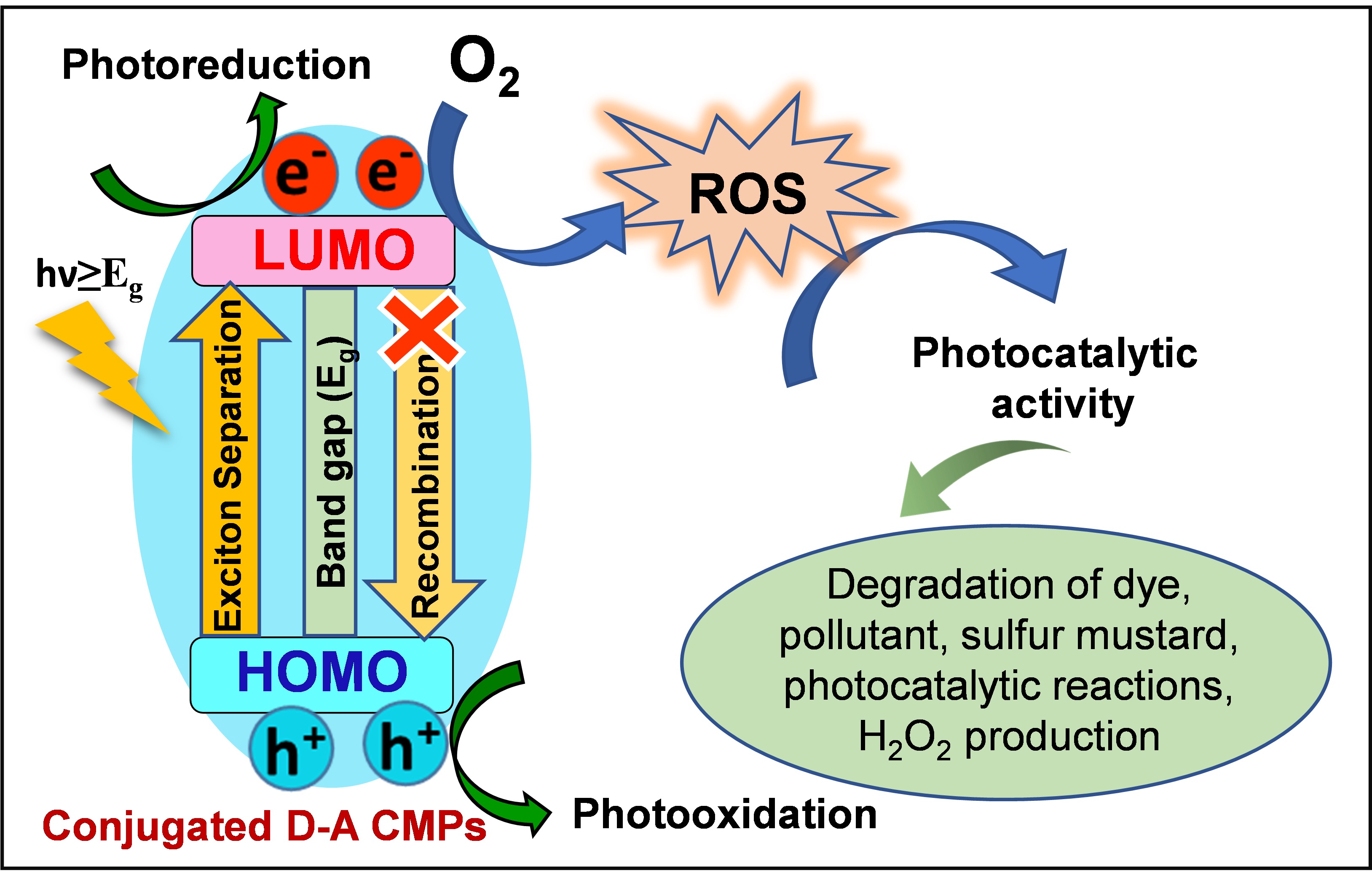
Donor-acceptor (D-A) conjugated microporous polymers (CMPs) are an interesting class of molecules for light-mediated generation of various reactive oxygen species (ROS) and photocatalytic organic transformations. We have shown that triphenylamine (TPA) linked D-A CPMs with various acceptor moieties having different acceptor strength, linkage positions, hetero-atom, and fused aromatics are useful in photocatalysis and pollutant degradation. Such D-A CMPs can generate excitons under light and, due to their efficient intramolecular charge transfer (ICT) properties, the excitons can effectively dissociate to produce photogenerated electrons and holes, which can perform reduction or oxidation reactions, respectively. The photogenerated electrons can activate triplet oxygen and reduce it to generate various ROS. These ROS are used for various organic transformations and pollutant degradation towards environmental remediation. We demonstrated that triphenylamine-anthraquinone-based D-A CMPs significantly photogenerate superoxide radical anion (O2•−) for oxidative hydroxylation of phenyl boronic acids to phenols with ~96% yields, as well as photoinduced degradation of micropollutants. Our recent findings demonstrated that single-atom substitution (S→Se) in the acceptor unit can profoundly alter oxygen uptake and charge transfer resistance, key for efficient generation O2•− for photooxidation of thioanisole. Therefore, this account gives a brief overview of such D-A CMP systems towards photocatalysis.
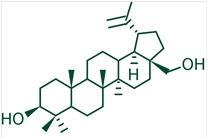
Review on Betulin: A nano-sized Pentacyclic dihydroxy-Triterpenoid
Studies on plant secondary metabolites have gained renewed interest
in recent years because these can serve as renewable chemicals for
the development of a sustainable society. Betulin, a naturally occuring
6-6-6-6-5 nano-sized pentacyclic Triterpenoid is obatainable from the
bark powdered of White Birch (Betula papyrifera). In this review, the
self-assembly of betulin in various organic liquids into supramolecular
architectures and its potential application in the adsorption of fluorophores and
removal of toxic dyes has been discussed. The potential pharmacological activities
such as cardiovascular, diabetes, cancer, liver and anti-inflamatory
has also been discussed
X-ray Triggered Activation of Doxorubicin Prodrugs for Concurrent Chemo-Radiotherapy: A Review
Keywords: Radiotherapy, Doxorubicin prodrug, Concurrent Chemo-radiotherapy, Cancer treatment
Abstract
Doxorubicin (DOX), a potent chemotherapeutic drug, suffers from severe cardiotoxicity and severe off-target side effects that constrain its therapeutic index. This review depicts the emerging paradigm of X-ray activatable DOX prodrugs, which harness clinically relevant ionizing radiation as an external trigger to achieve spatiotemporal control over drug release, thereby enabling precision Concurrent chemo-radiotherapy (CRT) which represents a frontier in cancer management. Herein, we systematically reviewed the key design strategies focusing on radiosensitive linkers/moieties, mechanistic pathway underlying X-ray-induced cleavage for prodrug activation within the tumor microenvironment to provide a blueprint for future development and inspire researchers to explore DOX prodrugs with real clinical applications.